
Sole trader vs limited company: a plain-English comparison
The real differences between trading as a sole trader and running a limited company in the UK — liability, admin, tax, privacy — and how to decide.
· 3 min read
“Should I go limited?” is the question every new UK business owner gets asked at some point, usually by a friend who went limited and now has an accountant. The honest answer is: it depends on your profit, your appetite for admin, and how much risk your work carries. Here is the comparison without the jargon.
What each one is
A sole trader is you, trading. The business and the person are the same legal thing. You register with HMRC for self-assessment, keep records, and pay income tax and National Insurance on your profits.
A limited company is a separate legal person. You own it (as a shareholder) and run it (as a director). The company earns the money, pays corporation tax on its profits, and pays you through a salary, dividends, or both. It is registered at Companies House and files accounts there every year.
Liability
This is the big one. As a sole trader, business debts are your debts: if a job goes badly wrong and you are sued, your personal savings and home are on the line. A limited company’s debts belong to the company; your liability is normally limited to what you put in. In practice, lenders and landlords often ask small-company directors for personal guarantees, which undo some of that protection. Good insurance matters in both cases.
Admin and cost
Sole trader: register once with HMRC, keep records, file a self-assessment return each year. Making Tax Digital for Income Tax is being phased in and brings quarterly digital updates for sole traders above an income threshold, so check where you fall.
Limited company: incorporate at Companies House (a small fee), file annual accounts and a confirmation statement, run payroll if you pay yourself a salary, file a corporation tax return, and complete a personal self-assessment return for the dividends. Most small companies pay an accountant to handle this. Budget for that when you compare.
Tax
Sole traders pay income tax at the normal bands on their profits, plus Class 4 National Insurance. Limited companies pay corporation tax on profits (a small-profits rate for lower profits and a main rate for higher ones), and you then pay income tax on the salary and dividend tax on the dividends you take out.
Ten years ago the tax saving from incorporating was large. It has narrowed considerably: dividend tax rates have risen and the dividend allowance has shrunk. For modest profits, the saving can be wiped out by accountancy fees. For higher profits, or if you can leave money in the company rather than draw it all, a company can still come out ahead. Because the rates change most years, run the numbers with an accountant on your own figures rather than a rule of thumb.
Privacy
A limited company’s accounts, directors’ names and registered office address are public on the Companies House register. A sole trader’s affairs are between them and HMRC.
Perception and contracts
Some larger customers and agencies will only deal with limited companies. Some grants, tenders and supplier accounts ask for a company number. If your customers are the public and small businesses, nobody minds either way.
Pensions and losses
Company pension contributions are a corporation tax deduction, which can be efficient. A company can also carry losses forward against its own profits; a sole trader can set early losses against other income, which is handy in a start-up year with a part-time job on the side.
Switching later
Starting as a sole trader and incorporating later is common and straightforward. Going the other way is messier. If you are unsure, sole trader is the low-commitment default.
A rough rule of thumb
- Profits under roughly £30,000, low-risk work, no plans to hire: sole trader. Keep it simple.
- Profits comfortably above that, or work that could cause expensive problems, or customers who insist: talk to an accountant about a company.
- Either way: keep clean records from day one. Invoices, expenses and mileage logged as you go make both structures far less painful.
Whichever you pick, the admin is the same in spirit: know what came in, what went out, and what you owe. Our bookkeeping spreadsheets work for both, with a sole-trader profit summary and company-friendly bookkeeping in the same familiar layout.
Browse the templates
Templates that help
 Business
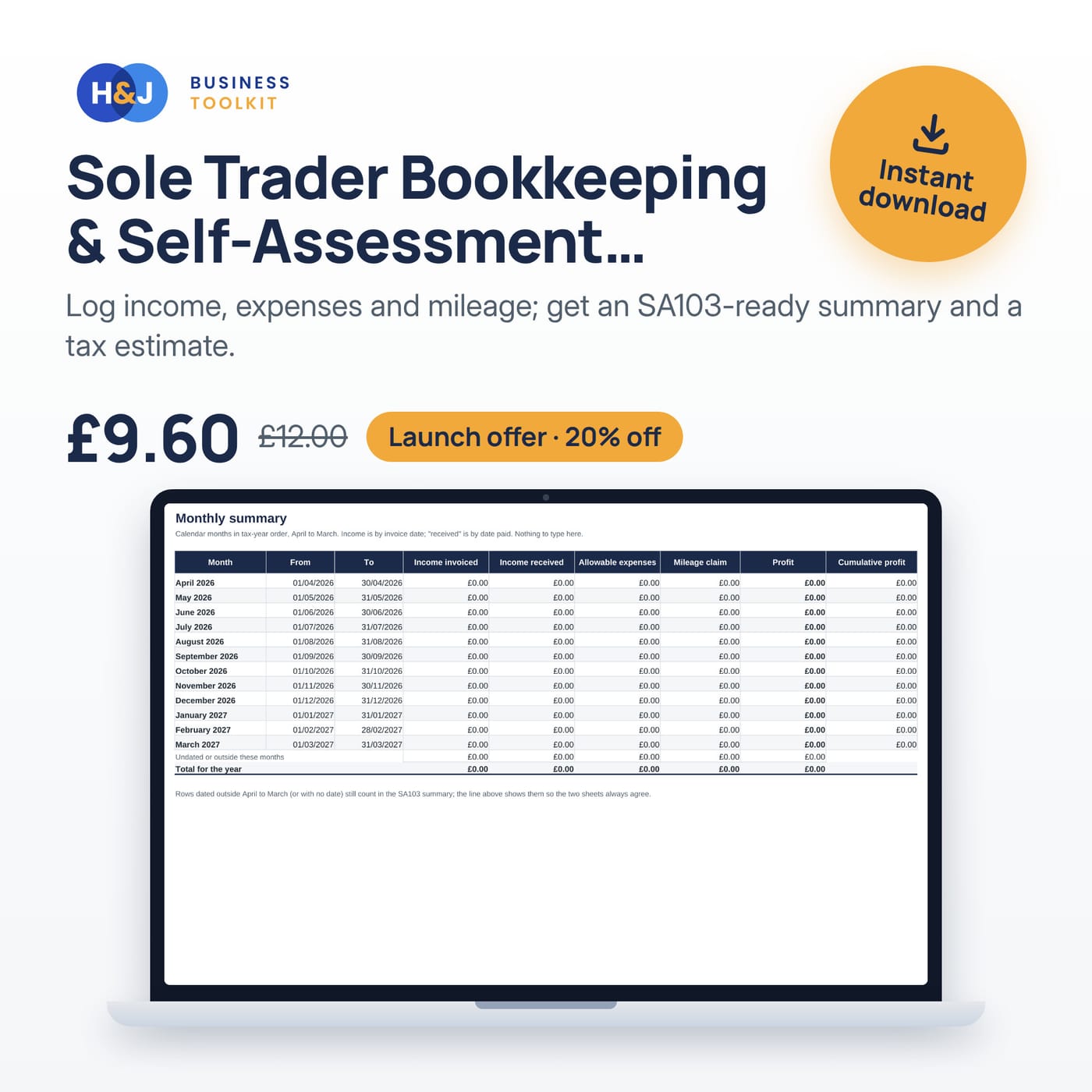
Sole Trader Bookkeeping & Self-Assessment Tracker
Log income, expenses and mileage; get an SA103-ready summary and a tax estimate.
Price: £9.60
was £12.00Launch offer: 20% offExcel · Google Sheets
 Business
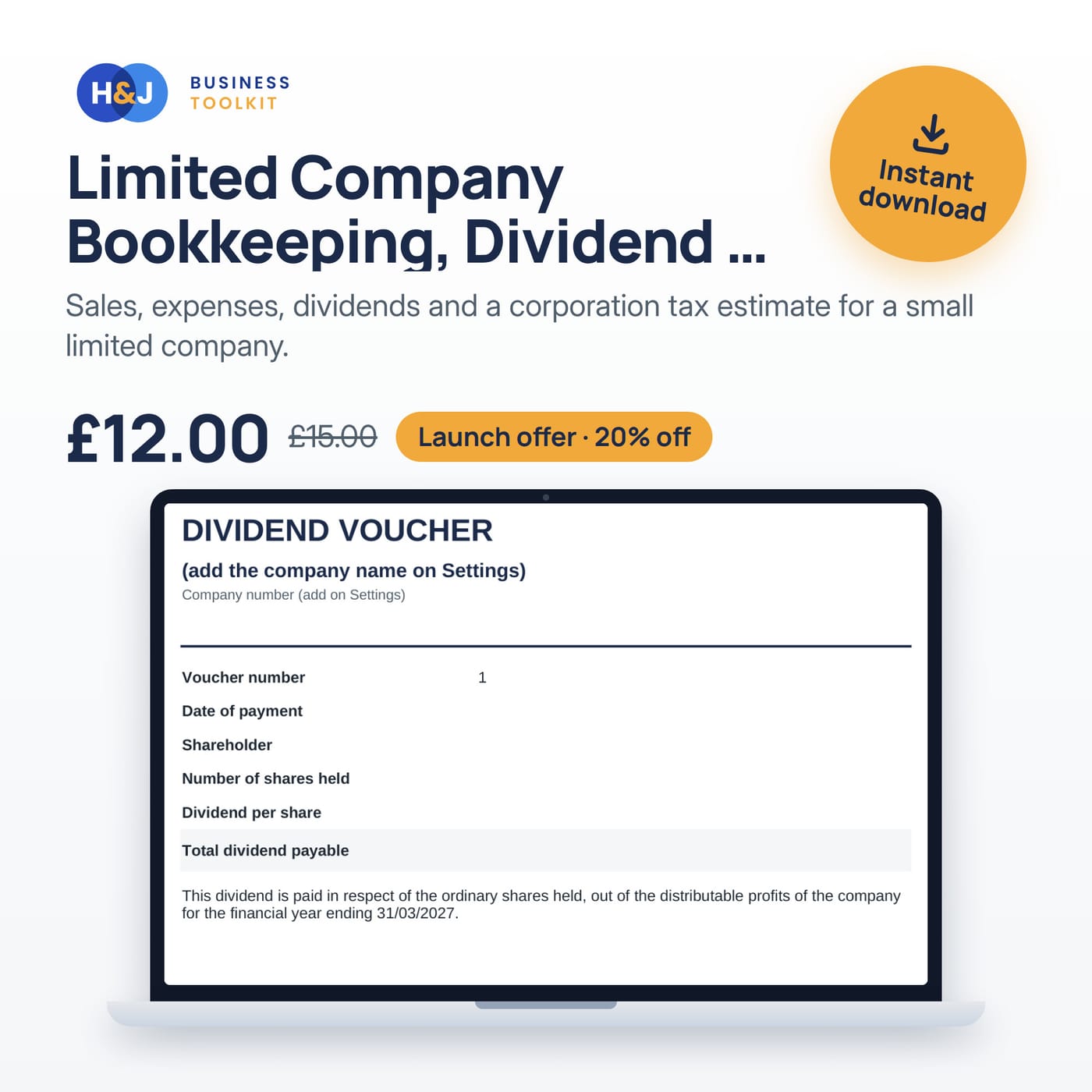
Limited Company Bookkeeping, Dividend & Corporation Tax Tracker
Sales, expenses, dividends and a corporation tax estimate for a small limited company.
Price: £12.00
was £15.00Launch offer: 20% offExcel · Google Sheets
 Business
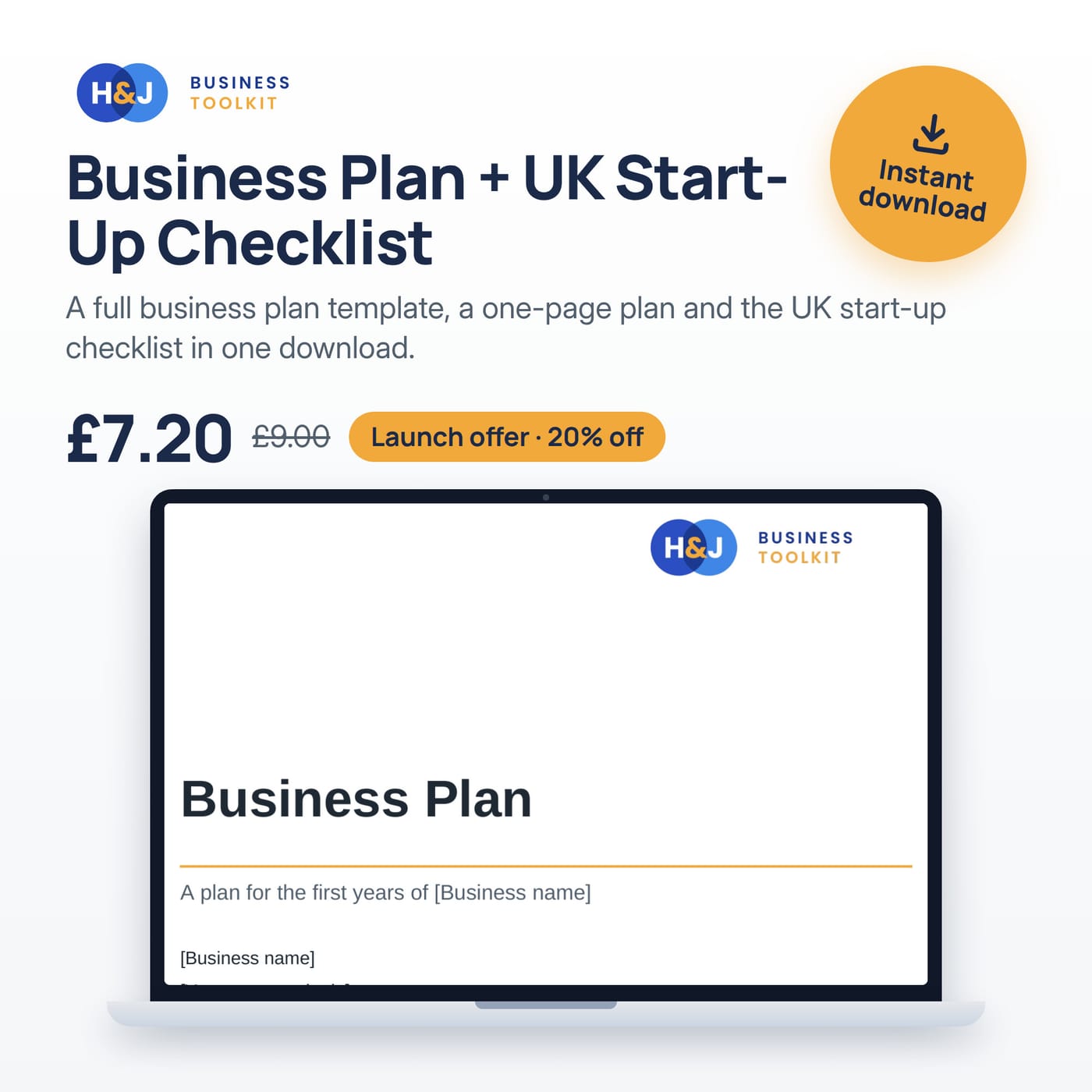
 Plan + UK Start-Up Checklist
A full business plan template, a one-page plan and the UK start-up checklist in one download.
Price: £7.20
was £9.00Launch offer: 20% offWord · Google Docs · PDF
Keep reading
How to make a 12-month cash flow forecast for a bank loan
Build a 12-month cash flow forecast a UK lender will take seriously: assumptions, payment timing, VAT and tax bills, and the checks to run first.
How to invoice as a sole trader in the UK
What a UK sole trader invoice must include, how to number and send invoices, and how to get paid on time.
Self-assessment expense categories explained
The expense boxes on the self-employment pages of a UK tax return, what goes in each, and the traps that catch sole traders out.
Get the free invoice template
A clean, UK-ready invoice for Excel and Google Sheets, plus occasional tips and new template news. Unsubscribe any time.
Your template is ready
We have also emailed the link to . Check your spam folder if it does not show up.
Download the template (.xlsx)For Google Sheets: upload the file to Drive and open it with Sheets. Trouble? Email support@hnjuk.co.uk.