Business
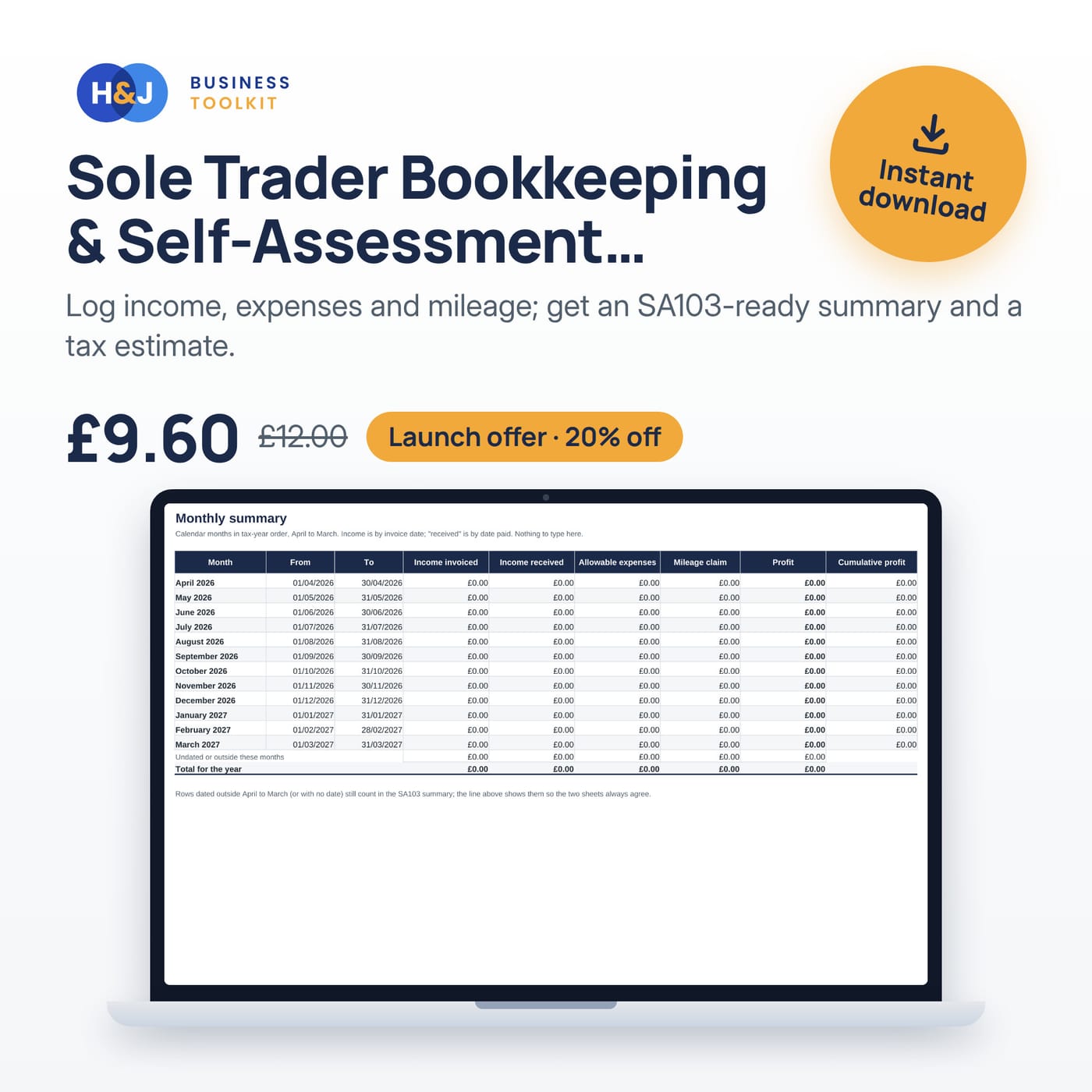
Sole Trader Bookkeeping & Self-Assessment Tracker
Log income, expenses and mileage; get an SA103-ready summary and a tax estimate.
Price: £9.60 was £12.00 Launch offer: 20% off
Excel · Google Sheets

Shop by need
Most small businesses do not need accounting software in their first years. They need somewhere tidy to record every sale, every expense and every business mile, laid out so the totals drop straight into a tax return or an accountant's inbox. That is what these spreadsheets do, in Excel or Google Sheets, with no monthly fee.
The sole trader tracker sorts your expenses into the same categories as the self-employment pages of the tax return (SA103), applies the approved mileage rates and estimates the income tax and Class 4 National Insurance to set aside. The limited company workbook logs sales and costs with VAT, records dividends and prints a dividend voucher for each one, estimates corporation tax with marginal relief and warns you if a dividend would exceed distributable profits. The 12-month cash-flow forecast shows whether there will be enough in the bank each month, which is exactly what a lender wants to see.
Every rate and threshold sits on one Settings sheet, so nothing is hidden inside a formula and an April update takes seconds. Unsure which structure suits you? Read sole trader vs limited company. These templates are record-keeping tools, not tax advice.
Log income, expenses and mileage; get an SA103-ready summary and a tax estimate.
Price: £9.60 was £12.00 Launch offer: 20% off
Excel · Google Sheets
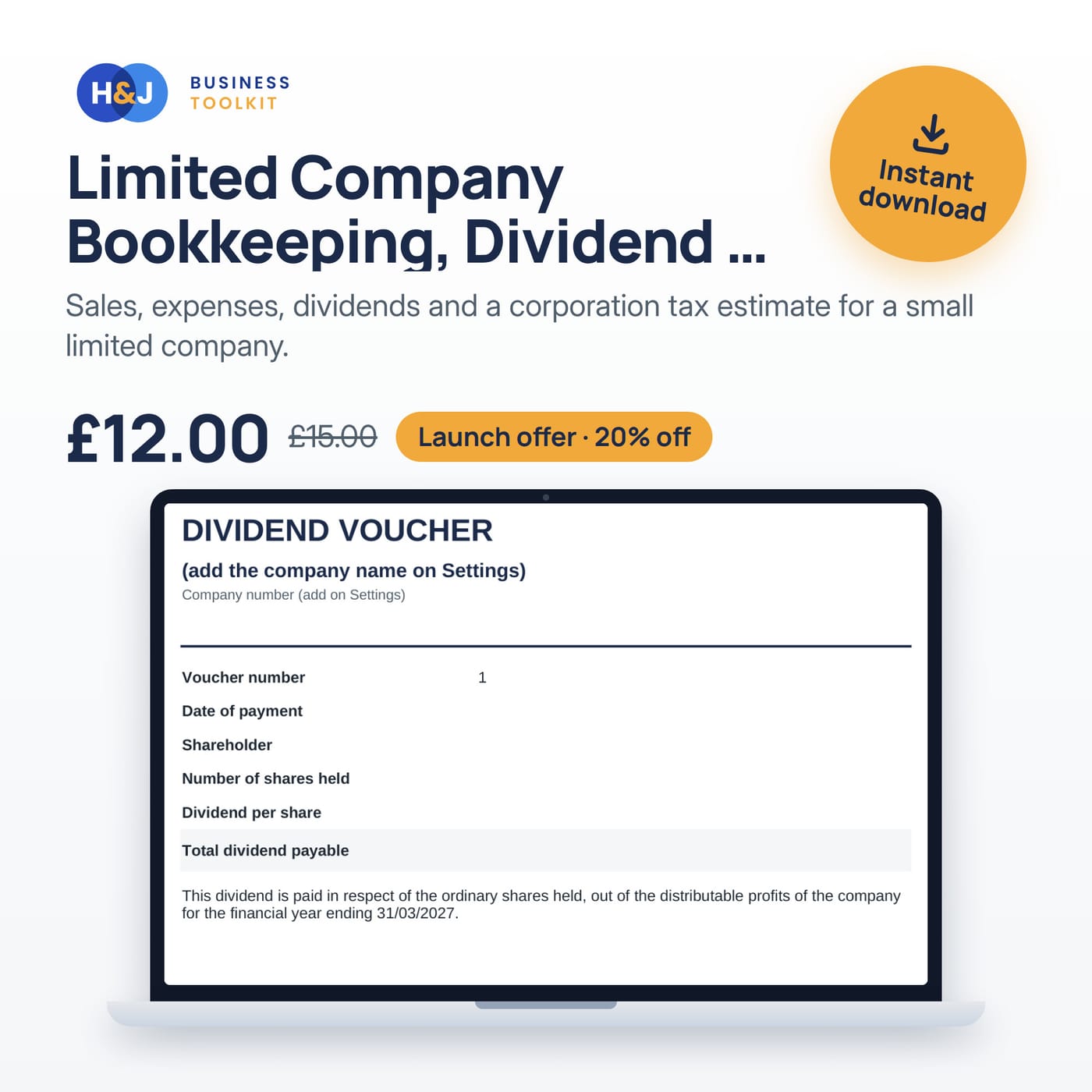
Sales, expenses, dividends and a corporation tax estimate for a small limited company.
Price: £12.00 was £15.00 Launch offer: 20% off
Excel · Google Sheets
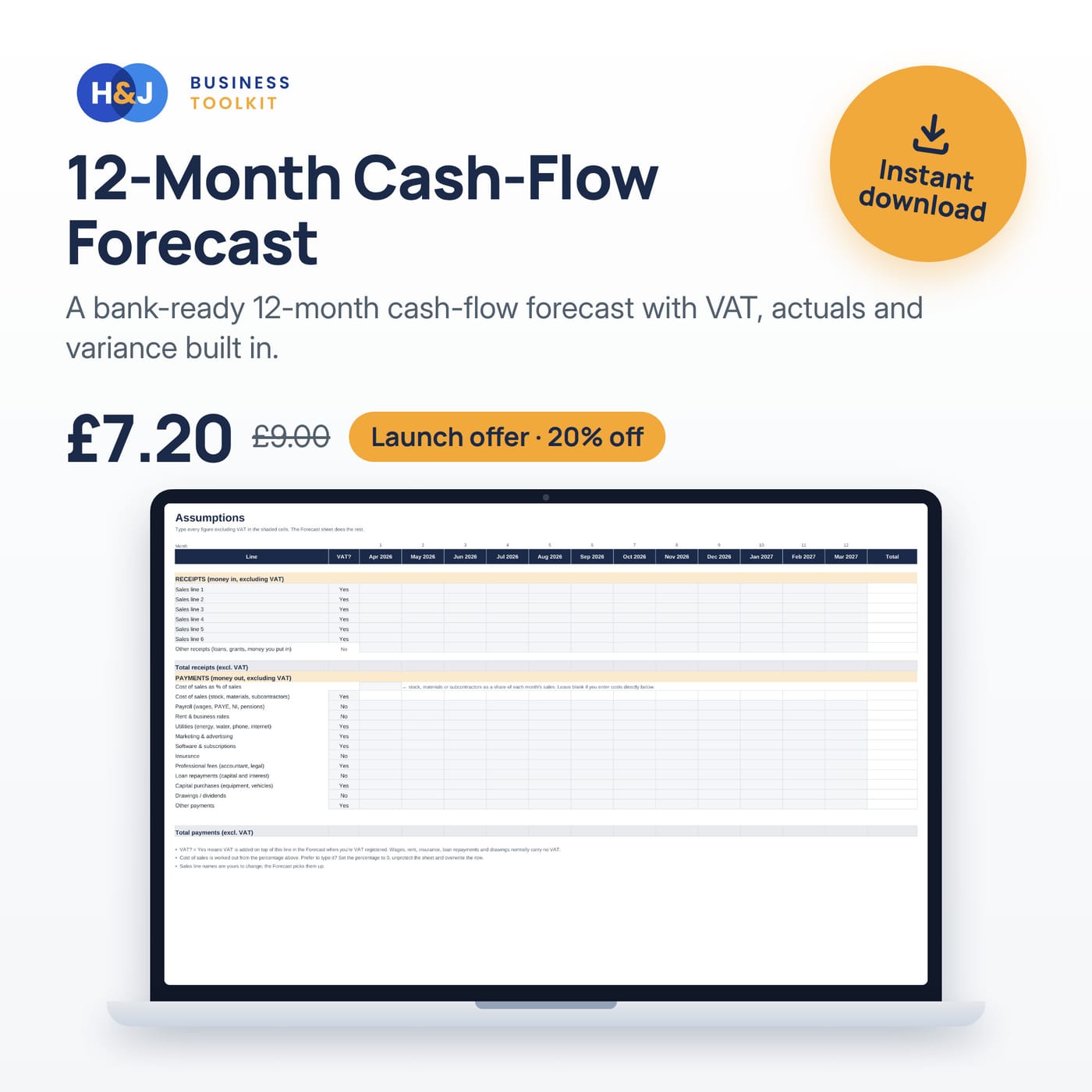
A bank-ready 12-month cash-flow forecast with VAT, actuals and variance built in.
Price: £7.20 was £9.00 Launch offer: 20% off
Excel · Google Sheets
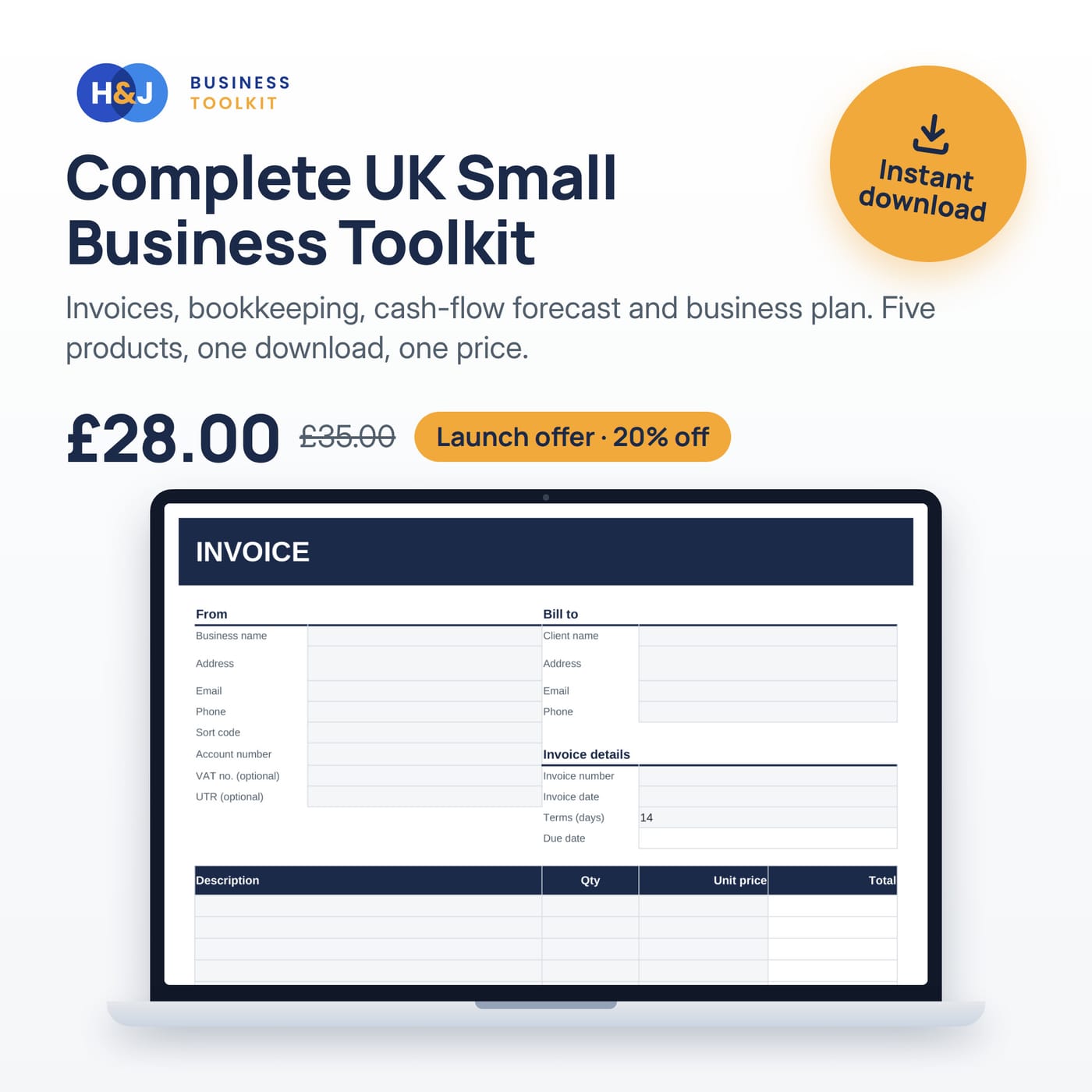
Invoices, bookkeeping, cash-flow forecast and business plan. Five products, one download, one price.
Price: £28.00 was £35.00 Launch offer: 20% off
Excel · Google Sheets · Word · Google Docs · PDF
If you registered for self-assessment as self-employed, use the sole trader tracker. If you run a company registered at Companies House and pay yourself dividends, use the limited company workbook.
Each workbook is built for the current UK tax year and every rate lives on a Settings sheet you can check against GOV.UK. We rebuild the templates each April.
Yes. The summaries follow the order of the tax return and standard profit and loss headings, so you can hand over the workbook or copy the totals across.
The expense boxes on the self-employment pages of a UK tax return, what goes in each, and the traps that catch sole traders out.
The real differences between trading as a sole trader and running a limited company in the UK — liability, admin, tax, privacy — and how to decide.
Build a 12-month cash flow forecast a UK lender will take seriously: assumptions, payment timing, VAT and tax bills, and the checks to run first.